Solutions · By team · Document processing
Every fax read, filed and turned into an order before anyone opens it.
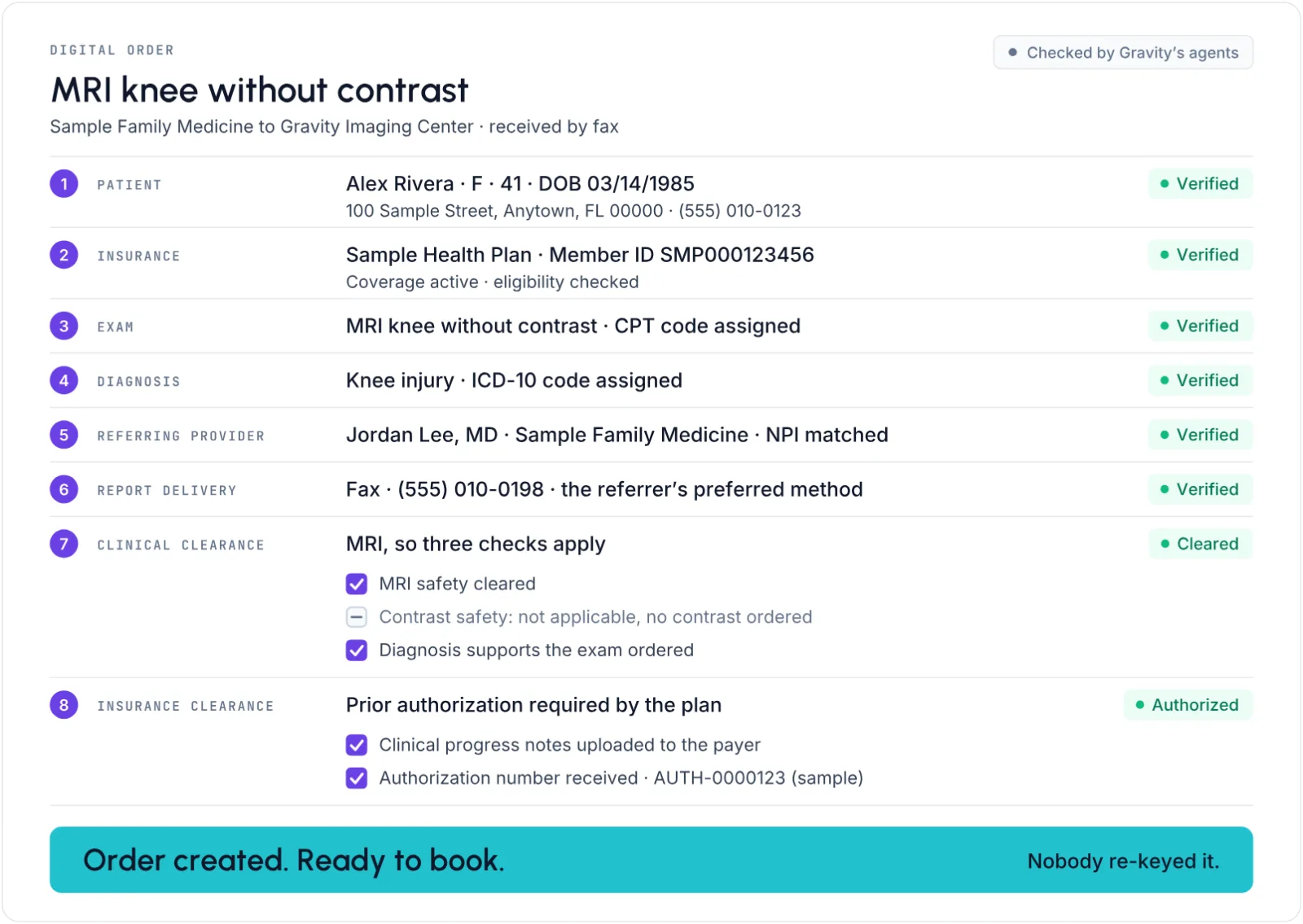
Gravity reads the fax, finds the patient (or creates one for your team to review), and creates the order. A person sees it only when something doesn't match.
For operations directors and intake leads
“Six to seven thousand faxes a month, four pages each.”
An operations director, in their own words
See it work
Walkthrough: one fax, from arrival to booking
Walkthrough · 1:38
What changes
The same team, a different day
Today
- Every fax opened, read and keyed by hand
- Multi-patient faxes split page by page
- Missing progress notes chased by phone
- The fax queue is the day's work
With Gravity
- Every page classified, indexed and filed on its own
- Order documents become complete orders, or drafts to confirm
- Missing documents requested from the order, and tracked
- The worklist holds only what Gravity couldn't finish
How it runs
How automated fax intake runs, from the fax to the booking call
One faxed order, start to finish. Each step names the part of Gravity that does it.
| Step | What happens | Feature | Done by | Mode |
|---|---|---|---|---|
| 01 | The fax arrives on your own number and lands in the document inbox. | Two-way fax | Gravity Communication | |
| 02 | Each page is classified, its patient, insurance, provider and exam details read, and filed on the right record, on its own. | Automatic classification, indexing and linking | Gravity Doc | Agentic |
| 03 | When the patient, referring provider and exam all match, the order is created. Anything uncertain goes to a person. | Automatic order creation | Gravity Doc | Agentic |
| 04 | Otherwise staff open an order form already filled in from the fax, and confirm it instead of typing it. | Draft order entry | Gravity Doc | |
| 05 | When the order is created, anything missing is flagged before it moves on. | Order completeness check | Gravity Doc | Automated |
| 06 | What Gravity couldn't finish is assigned to a person the moment it arrives. | Auto workload distribution | Gravity Work | Automated |
| 07 | A missing order, progress note or authorization is requested from the referring office, and each request is tracked. | Request a missing order | Gravity Doc | Automated |
| 08 | As soon as the order is received, an agent checks that the exam ordered is appropriate and correct for the patient, and flags anything that isn't for a person to resolve. | Order appropriateness check | Gravity Doc | Agentic |
| 09 | Coverage, eligibility and authorization gaps on the new order are flagged before the exam. | Financial clearance | Gravity Estimate | Agentic |
| 10 | As soon as the order exists, the patient is texted or called to book. | Booking outreach | Gravity Booking | Agentic |
Receiving the fax is automated. Reading it and creating the order is agentic, and for automatic order creation your center chooses: a person reviews every order, or the routine ones finish on their own. Your people handle the exceptions.
Gravity today
- 5.7 millionimaging orders a year processed by Gravity
Trusted by more than 460 imaging centers across the US.
Questions
Questions about automated fax intake
What is automated fax intake for imaging centers?
Faxed orders arrive in Gravity on their own, on the center's own number. Gravity reads each page, files it on the right patient, order or visit, and creates the order when the patient, referring provider and exam all match. Anything it isn't sure of goes to a person.
What happens to my team?
Your team reviews the work instead of re-keying it. Most centers start with draft orders that staff confirm, then turn on automatic order creation once they trust the matches, and the team works only the documents Gravity couldn't finish.
What happens when Gravity isn't sure?
It doesn't create a partial order. An order is created automatically only when the patient, provider and exam are all resolved; anything else goes to a person on the document worklist.
Do referring offices have to change how they send orders?
Fax is built in. Gravity reads the fax, creates the order, and offers referring offices a portal when they're ready. Either way the report goes back the day it's signed.
For operations directors
45 secondsis usually all it takes for a new document to be readable, with its patient details (p95).